Extraction: Shale Mining Oral Histories
Shale Mining Oral Histories
Alongside Extraction read about the experiences and community life of the Scottish Shale mining communities of West Lothian.
Kindly supported by Almond Valley Heritage Trust 135 audio sets were recorded in the 1980’s by G. Cleland, S. Braithwaite, S. Randall, K. Wallace, A. Meek with local residents and former shale oil workers discussing their experiences of the shale oil industry and community life.
Below are four highlights that explore the daily life of women, children and families directly impacted by Scotland’s Shale and Oil industry.
TW: Some of the accounts touch on sensitive and intimate issues.
Four Highlighted Experiences
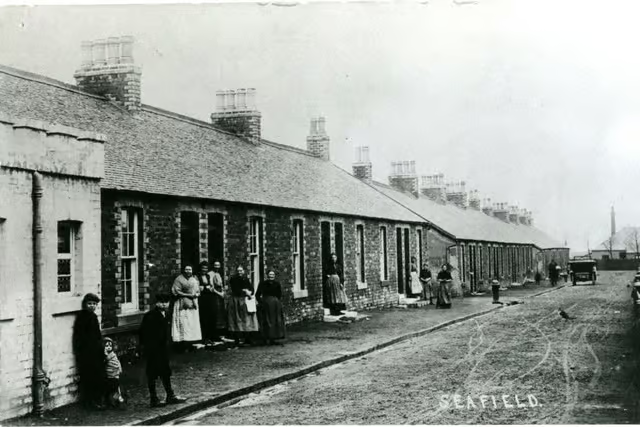
Typical Row of houses, at Seafield rather than Happy Land. Source: Almond Valley Heritage Trust.
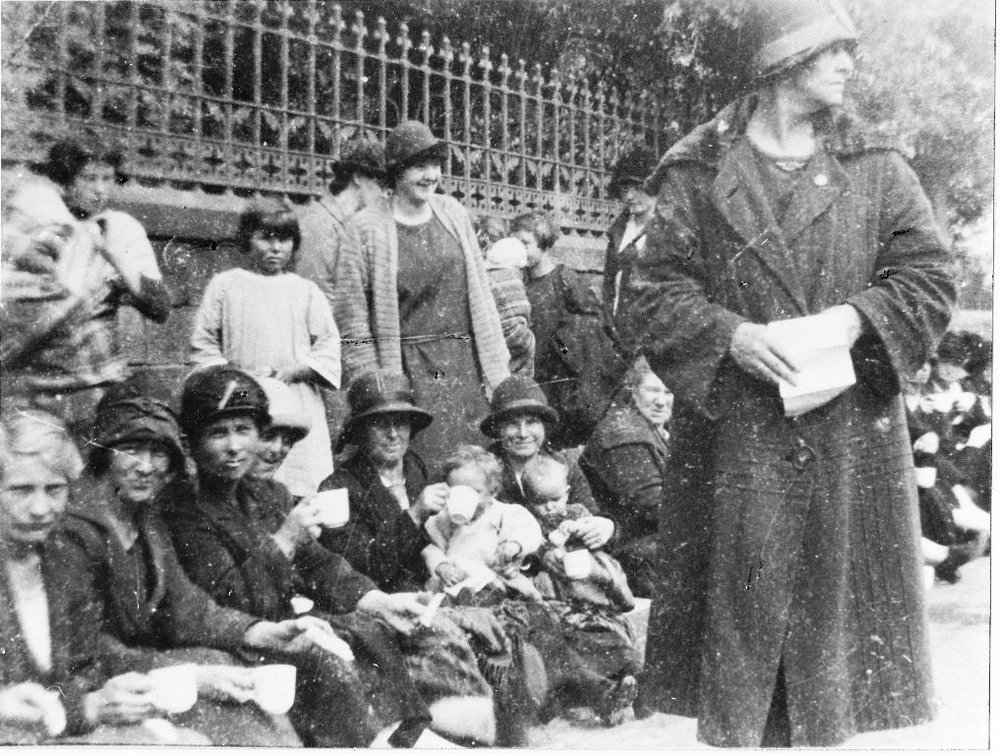
A peaceful sit-in in West Calder 1926, with Ma Moore. Source: Addiewell Heritage Trust
Leslie Johnston
Based in Linlithgow, Leslie Johnston speaks about his career from working in the Airforce and how he got into working in the Shale Mines. The National Union of Shale and Oil Workers was a key trade union established to represent miners, particularly in West Lothian, Scotland. The Union helped provide fair pay, protect workers right and implement safe working conditions.
One snippet from Leslie’s experience:
“Did you know of anybody that had to go to the Union?
LJ: No! I can’t say that I did! You see, down in the shale, they could pay you what they wanted. Do you know what I mean! The minimum wage……but them that were on their own would get a bit extra two bob for……you know, jobs, wee jobs round about, and get away with it! It all went on! At one time, the faceman got the pay and the faceman paid the drawer, but there was none of that when I went back to Whitequarries. You got your own pay packet then! You all got your own packets then! (Inaudible) “
Margaret Dudgeon
TW: This extract, talks about the realities of being a woman and the hardships of pregnancy and abortions. Based in Broxburn, Margaret Dudgeon speaks about her memories of family life growing up with parents working in the shale mines and the impacts of the mines closing down. Life for women was a lot more centred around being at home and looking after children.
Margaret talks about dealing with losing family members and the responsibilities of her mother:
“My mother had a hard life. She started off married life with four brothers and a sister and four brothers. And the four brothers was married before she was and she was left with 4 brothers and a sister to bring up. My grandmother and grandfather died young. They died in their early forties. But she had a hard life. And then she had my Granny Lynch, my father’s mother – she had her to look after after my grandfather was killed in the pit up at the works. He got crushed between 2 wagons and he got his heart pierced. So he got killed. So she had a hard life, but a happy life.”
Mr & Mrs Livingston
Mrs Livingston grew up as the daughter of a mining father in Bridgend, her family life was shaped by her father working in dangerous conditions and long hours. Communities often faced a lack of safe housing and traditional gender roles meant women were expected to cook, knit, and sew in the home. Despite these challenges, there are memories gala days, picking wild strawberries and sledging on the bings in .
The dangerous conditions can be seen from this excerpt:
L: “Oh, I had an accident to my back in the mine. I was working in a place maybe higher than, this roof, and the ….. when I was bent filling my hutch one night a fall of shale came away from the roof, and hit me; some nasty bits hit me on the back, and I was off for”
ML: “Thirteen months”
Robina Quigley
As the daughter of a mine contractor with brothers who worked as miners, her life was closely tied he mining community. Living through both World War I and World War II, she experienced significant social and economic change while balancing family and working life. Community, religion and football were part of her everyday life as well as participation in the Labour Party and trade unions, including helping to form a local women’s Labour group.
“My Father was a contractor in the mines with Scottish Oils.The more shale that came up the more money they got paid”
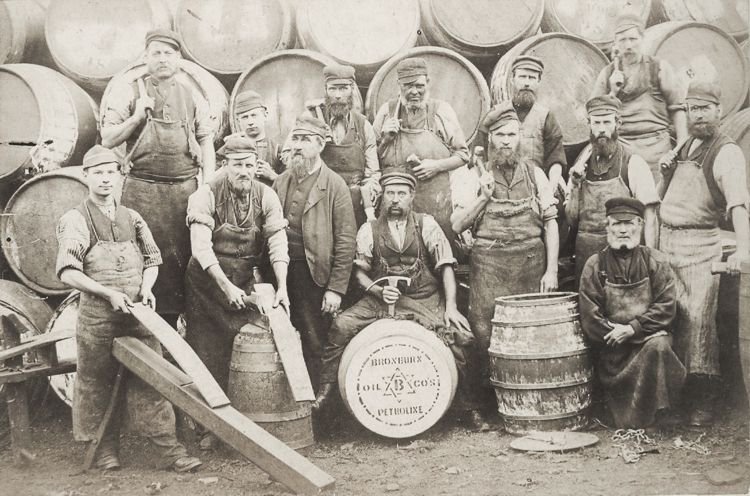
Coopers employed at Broxburn, making barrels for oil, during the first world war. Source: Almond Valley Heritage Trust